The Ultimate Guide to Tech-Forward Hiking Gear: From Solar Chargers to AI Trail Maps
Introduction: Why Your Next Hike Needs a Tech Upgrade
Remember when hiking was about a map, a compass, and hoping you remembered the trail? Those days are over. Today, the wilderness is getting a high-tech makeover, and it’s transforming how we explore, navigate, and survive in the great outdoors. Imagine a hike where your watch not only tracks your heart rate but also predicts weather shifts on your specific ridge. Picture a water bottle that purifies a stream in seconds, or a map that learns and adapts, showing you hidden vistas based on your pace. This isn’t science fiction; it’s the current reality of tech-forward hiking gear.
In this guide, we’ll dive deep into the essential gadgets that are revolutionizing trail life. We’ll explore how solar chargers keep your devices alive under the open sky, why modern GPS hiking watches are like having a guide on your wrist, the magic of AI trail maps that think for themselves, and the lifesaving simplicity of smart water filters. Whether you’re a weekend warrior or a thru-hiking veteran, integrating this technology will make your adventures safer, more efficient, and infinitely more enjoyable. Let’s gear up.
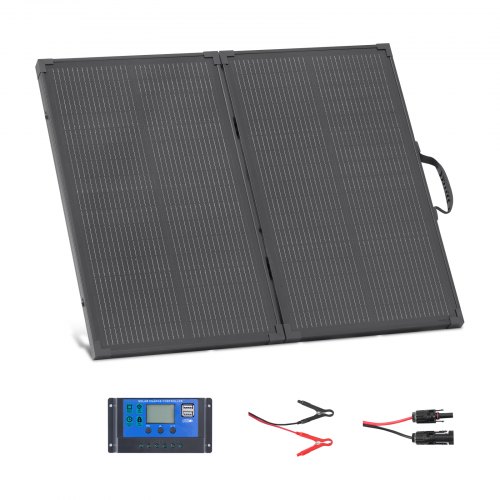
The Backbone of Backcountry Power: Mastering Solar Chargers
Gone are the days of your phone dying just as you reach the summit photo op. Solar chargers have evolved from bulky, inefficient panels into sleek, powerful power stations for the trail.

How Modern Solar Chargers Work
Today’s top models use monocrystalline silicon cells, which are highly efficient at converting sunlight into electricity, even on partly cloudy days. They’re integrated with smart circuitry that manages power flow to prevent overcharging your devices.
Key features to look for include:
- High Wattage and Output: Aim for a panel with at least 10-15W for reliable phone charging. For charging larger devices like cameras or satellite messengers, 21W or more is ideal.
- Durability: The best are waterproof, dustproof, and feature rugged, tear-resistant materials.
- Portability: Foldable or rollable designs with integrated carabiners for easy attachment to your pack are game-changers.
- Integrated Power Banks: Many now come with a built-in battery, allowing you to collect solar energy all day and charge your devices at night.
- Emergency Preparedness: Ensuring your satellite communication device (like a Garmin inReach or SPOT) is always operational.
- Documenting the Journey: Powering cameras, action cams, and drones to capture every moment.
- Camp Comfort: Running a small LED camp light or recharging a Bluetooth speaker for some campfire tunes.
- Pre-Loaded Topographic Maps: View detailed trails, elevation contours, and points of interest right on your wrist.
- ClimbPro & PacePro Technology: Advanced models analyze your route ahead of time, warning you of steep ascents and suggesting sustainable pacing.
- Pulse Ox & Altitude Acclimation: Monitor blood oxygen saturation and track how well your body is adjusting to high elevation.
- Extended Battery Life: Smart modes can offer 50+ hours of GPS tracking, with some watches lasting weeks in basic watch mode.
- Incident Detection: With built-in sensors and connectivity, some watches can detect a hard fall and send your location to emergency contacts.
- Trail Condition Predictions: The AI can analyze recent weather data and user reports to predict if a trail will be muddy, snowy, or overgrown.
- Personalized Route Suggestions: Based on your past hiking history, fitness level, and stated preferences (e.g., “seek solitude,” “love waterfalls”), the AI can recommend new trails you’ll love.
- Offline 3D Mapping: Download incredibly detailed 3D renderings of the terrain, allowing you to virtually scout lines and assess slope angles before you go.
- Congestion Forecasting: By analyzing typical usage patterns, the AI can suggest less-crowded alternative routes or optimal times to start your hike.
- Advanced Purification: Many now combine mechanical filtration with UV-C LED light or electrochemical purification to also destroy viruses, which are smaller than bacteria.
- Filter Life Indicators: Digital monitors track liters filtered and give clear warnings when the filter cartridge needs replacement, removing the guesswork.
- Real-Time Water Quality Sensors: The cutting edge includes bottles with sensors that can detect and alert you to specific contaminants like heavy metals or certain chemicals.
- Rapid Flow Rates: Technological improvements in filter media allow for gravity filters or bottles that provide safe water in seconds, not minutes.
Pro Tip: Don’t just set it and forget it. Angle your solar panel directly toward the sun and adjust it every few hours for maximum efficiency. Hooking it to the back of your pack while you hike is a great way to passively generate power.
Top Use Cases on the Trail
* Keeping Navigation Alive: Your GPS hiking watch and smartphone mapping app are useless without power.
Your Wrist-Worn Command Center: The Evolution of GPS Hiking Watches
The humble wristwatch has morphed into the most critical piece of tech-forward hiking gear. A modern GPS hiking watch is a navigation hub, fitness tracker, and survival tool all in one.
Beyond Basic Tracking: What Makes Them “Smart”
These devices do far more than just mark your location. They use multi-band GNSS (Global Navigation Satellite System) technology for pinpoint accuracy, even in deep canyons or dense forests.
Essential features for hikers now include:
Integrating with the Larger Tech Ecosystem
The true power of a GPS hiking watch is unlocked when it syncs with other gear. It can control your smartphone camera, display notifications, and, most importantly, sync data with AI trail map applications for deeper post-hike analysis.
The Future of Navigation: Understanding AI Trail Maps
This is where things get truly futuristic. AI trail maps are not static digital copies of paper maps; they are dynamic, intelligent systems that learn and provide predictive insights.
How AI Enhances the Trail Map Experience
Artificial Intelligence algorithms process vast amounts of data from thousands of hikers, satellite imagery, and real-time environmental sensors.
Here’s what AI-powered platforms like AllTrails Pro, Gaia GPS, or Fatmap can do:
Synergy with Your Gear
You plan your route on an AI trail map platform. You sync it to your GPS hiking watch for turn-by-turn navigation on the trail. The data from your watch (heart rate, actual pace) is then fed back into the AI, making its future predictions for you and others even more accurate. It’s a powerful, closed-loop system.
Hydration Reimagined: The Science of Smart Water Filters
Water is life, especially on the trail. Smart water filters have moved beyond simple pumps and straws, integrating technology to ensure your water is not just clean, but safe.
The “Smart” Difference in Water Filtration
While traditional filters remove protozoa and bacteria, “smart” features address modern concerns and add layers of safety and convenience.
Look for these advanced features:
Safety First: A smart water filter gives you the confidence to safely utilize water sources that might have been questionable in the past, allowing for lighter packs (carrying less water) and greater route flexibility.
Building Your Integrated Tech-Forward Hiking System
The magic happens when these devices work together. Here’s how to build a seamless ecosystem for your next adventure.
A Day in the Life of a Tech-Forward Hiker
1. Pre-Hike: You use an AI trail map app to study a 10-mile loop. The AI suggests a 7 AM start to avoid afternoon thunderstorms it has forecasted for your specific elevation. You download the 3D map to your phone and sync the route to your GPS hiking watch.
Gear Synergy Table
| Gear Piece | Primary Function | Key Synergy Benefit |
| :— | :— | :— |
| Solar Charger | Provides Renewable Power | Fuels the entire system, ensuring GPS watch and phone with AI maps stay operational. |
| GPS Hiking Watch | Navigation & Biometric Tracking | Provides real-time location data and performance metrics that feed into and from AI trail maps. |
| AI Trail Maps | Intelligent Route Planning & Analysis | Sends detailed navigation to the watch and uses the watch’s data to learn and improve. |
| Smart Water Filter | Guaranteed Safe Hydration | Supports the hiker’s health, enabling sustained performance tracked by the watch. |
Addressing Common Concerns & FAQs
Q: Doesn’t all this tech take away from the experience of “getting away from it all”?
A: That’s a valid concern. The goal isn’t to be glued to a screen, but to use technology as a tool for safety and enhancement. It’s about knowing you can check a detailed map instantly, not that you must. It allows for deeper exploration with a stronger safety net.
Q: Is this gear reliable in harsh weather?
A: Modern tech-forward hiking gear is built to military-grade durability standards (look for IPX7/8 waterproof ratings). Solar chargers work in diffuse light, GPS watches use robust satellite networks, and smart filters have mechanical backups. Redundancy (like a paper map backup) is always wise.
Q: What’s the biggest mistake beginners make with hiking tech?
A: Not practicing at home! Set up your AI trail map app, create a route, and sync it to your GPS watch in your living room. Learn the menus. Charge all devices with your solar charger in your backyard. Familiarity prevents frustration on the trail.
Q: How do I start without breaking the bank?
A: Prioritize. A reliable smart water filter is non-negotiable for safety. Next, invest in a robust GPS hiking watch or a smartphone app with offline AI maps. A solar charger can be a later addition as you take longer trips.
Conclusion: Embrace the Trail of Tomorrow
The wilderness hasn’t changed, but our tools for understanding and enjoying it have undergone a revolution. By thoughtfully integrating solar chargers, GPS hiking watches, AI trail maps, and smart water filters, you’re not just adding weight to your pack—you’re adding a layer of safety, a wealth of knowledge, and a new dimension of confidence to every journey. This tech-forward hiking gear allows you to push your boundaries, explore with greater awareness, and focus more on the beauty around you and less on the uncertainties. Start with one piece, learn it intimately, and build your system. The trail is calling, and now, you’re equipped to answer smarter than ever before.
Ready to upgrade your adventure? Share your favorite piece of hiking tech with our community on social media using #TechForwardHiker. For detailed reviews and side-by-side comparisons of the latest gear, subscribe to our newsletter below. Your next great adventure, powered by the perfect gear, awaits.