The Ultimate Guide to Understanding Length: From Atoms to Galaxies
Have you ever stopped to think about how much our world is defined by length? It’s the first measurement we learn as children, scribbling lines with crayons. It dictates whether your jeans will fit, if your new couch will make it through the doorway, and how far you have to travel to work. But length is so much more than just inches on a tape measure. It’s a fundamental concept that bridges the gap between the quantum foam of subatomic particles and the mind-bending vastness of the observable universe. In this deep dive, we’re going to stretch our understanding of length, exploring its history, its science, its quirky units, and its profound implications on everything from daily life to the fabric of reality itself. Get ready to see the world—both the very small and the unimaginably large—in a whole new dimension.
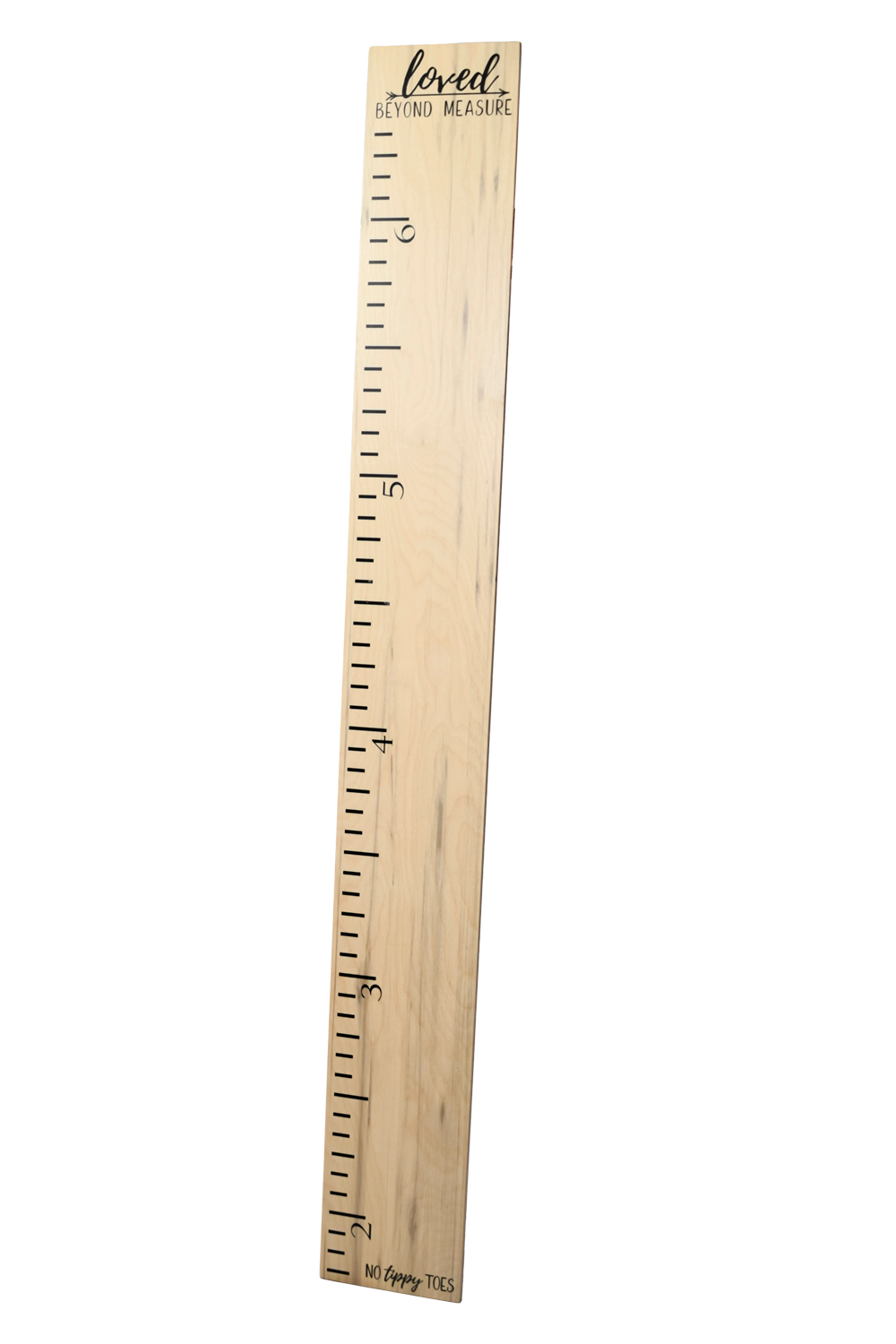
What is Length, Really? Beyond the Ruler
At its core, length is the measurement of one-dimensional space between two points. It’s the answer to the question, “How far apart are these things?” While this seems straightforward, the way we define, measure, and conceptualize length has evolved dramatically through human history and scientific discovery.
For most of human existence, length was a relative and practical affair. The ancient Egyptians used the cubit—the length from a man’s elbow to the tip of his middle finger. The Romans had the pes (foot). The problem? My arm isn’t the same as your arm. This lack of standardization worked for local trade but created chaos in broader commerce and science.
The quest for a universal standard of length is a story of human cooperation and precision. The big breakthrough came with the French Revolution and the creation of the metric system. Scientists defined the meter as one ten-millionth of the distance from the North Pole to the Equator along a meridian through Paris. This was a monumental shift: a unit of length based on a property of the Earth itself, not a variable human body part.
Today, we’ve gotten even more precise. Since 1983, the meter has been defined by the unchangeable speed of light in a vacuum. One meter is officially the distance light travels in 1/299,792,458 of a second. This definition is universal, constant, and incredibly accurate, allowing scientists and engineers across the globe to speak the same literal language of measurement.
The Everyday Impact of Standardized Length
* Global Trade: A screw manufactured in Taiwan will fit perfectly into a device assembled in Germany because of agreed-upon metric or imperial thread standards.
- Construction & Engineering: Skyscrapers, bridges, and microchips all rely on exquisitely precise length measurements. A miscalculation of millimeters can lead to catastrophic failure.
- Clothing and Fashion: Standardized sizing (though notoriously variable) is based on body length measurements, enabling mass production.
- Beard-Second: A humorous unit of length in computing, equal to the distance a beard grows in one second (about 5 nanometers). It’s used to describe very small lengths, like transistor sizes.
- What it is: Approximately 1.6 x 10^-35 meters. That’s a decimal point followed by 34 zeros and then a 16.
- Why it matters: At this scale, our classical ideas of space and length break down. Quantum gravity effects dominate. It’s the smallest possible measurable length in our current understanding of physics. To put it in perspective, if you magnified an atom to the size of the observable universe, a Planck Length would be roughly the size of a single tree on Earth.
- Strings (String Theory): Possibly around the Planck scale.
- Quarks & Electrons: Fundamental particles, smaller than 10^-18 meters.
- An Atom: Roughly 10^-10 meters across (0.1 nanometers). A human hair is about 1,000,000 atoms wide.
- The Everyday: Rulers, tape measures, odometers, and laser distance measurers.
- The Precision Engineering: Calipers and micrometers can measure down to thousandths of an inch or hundredths of a millimeter.
- The Scientific & Industrial:
- Interferometry: Uses the interference of light waves to measure distances with nanometer precision. This is how the LIGO observatory detected gravitational waves by measuring a change in length 1/10,000th the width of a proton.
- Radar/Lidar: Uses radio or laser waves to measure distance by timing how long the signal takes to bounce back. Used in weather forecasting, police speed guns, and self-driving cars.
- Parallax: The fundamental method for measuring distances to nearby stars. Astronomers observe a star from opposite sides of Earth’s orbit and measure its apparent shift against the distant background.
- Standard Candles (e.g., Type 1a Supernovae): For measuring cosmic distances. If you know the true brightness of an object (the “candle”), you can calculate its distance by how dim it appears from Earth.
- What it is: An object in motion relative to an observer will appear shorter along its direction of motion than when it is at rest.
- The Catch: You only notice this at speeds approaching the speed of light. A spaceship traveling at 90% the speed of light would appear about 44% shorter to a stationary observer. To everyone on the ship, everything would seem normal.
- Why it happens: It’s a necessary consequence of the fact that the speed of light is constant for all observers. It’s not an illusion; it’s a real feature of spacetime.
- Pixels (px): The tiny dots of light on your screen. Screen resolution (e.g., 1920×1080) is a measure of length in pixels. A pixel doesn’t have a fixed physical length—a 1080p image will be a different physical size on a phone vs. a TV.
- Points (pt): A traditional print typography unit. 1 point is 1/72nd of an inch.
- Vectors vs. Rasters: This is a crucial distinction.
- Raster images (JPEG, PNG) are made of a fixed grid of pixels. Zoom in far enough, and you see blurry squares. The length information is tied to pixel density (DPI/PPI).
- Vector graphics (SVG, AI) are defined by mathematical equations (points, lines, curves). You can zoom in infinitely, and the length and edges remain perfectly sharp. They are resolution-independent.
- Anchor Text: “theory of Special Relativity” Link To: A beginner’s guide to Einstein’s theories.
- Anchor Text: “history of the metric system” Link To: A deep-dive article on the creation and adoption of the metric system.
- National Institute of Standards and Technology (NIST): [https://www.nist.gov/] (The official US resource on measurement standards)
- NASA’s “Imagine the Universe” Dictionary: [https://imagine.gsfc.nasa.gov/resources/dictionary.html] (For clear definitions of astronomical terms like parsec and light-year).
- For an illustration of length contraction: “Artistic depiction of a spaceship appearing shorter as its speed approaches the speed of light, demonstrating Einstein’s theory of relativity.”
- For a scale graphic of the universe: “Logarithmic scale graphic showing objects from a human to galaxies, illustrating the vast range of lengths in the cosmos.”
A Tour of the Tape Measure: Units of Length Through Time and Culture
We may use meters and feet today, but the world is full of fascinating—and sometimes bizarre—historical units of length. They offer a window into the cultures that created them.
The Quirky and the Historical
* Smoot: In 1958, MIT fraternity pledge Oliver Smoot was used as a measuring tool to mark the length of the Harvard Bridge. Lying down repeatedly, his friends determined the bridge was “364.4 Smoots long.” The marks are repainted yearly, and the Smoot is now a beloved unit of local lore.
The Arabian Assba*: Originally the width of a finger, and later standardized.
The Japanese Shaku*: Roughly equal to a foot (about 30.3 cm), derived from the length between nodes on a bamboo stalk.
The Two Big Systems: Metric vs. Imperial/US Customary
Most of the world uses the metric system (meters, centimeters, kilometers), a elegant base-10 system where everything scales by factors of ten. The United States, Liberia, and Myanmar primarily use the US Customary system (inches, feet, yards, miles), a system with less intuitive conversions (12 inches in a foot, 3 feet in a yard, 1,760 yards in a mile).
The beauty of the metric system lies in its simplicity and scalability. Need a bigger unit? Add a prefix like kilo- (1,000x) or mega- (1,000,000x). Need a smaller one? Use centi- (1/100th) or milli- (1/1000th). This coherence is why it dominates global science, medicine, and industry.
The Extremes of Length: From the Planck to the Parsec
To truly appreciate length, we need to look at its absolute extremes. The scale of reality is the most humbling and awe-inspiring concept in science.
The Infinitesimally Small
Our journey begins at the theoretical limit of smallness: the Planck Length.
Zooming Out from the Planck Length:
The Unfathomably Vast
Now, let’s travel in the other direction, beyond our planet and solar system.
| Object | Approximate Length/Diameter | A Helpful Analogy |
| :— | :— | :— |
| Earth | ~12,742 km | A blue marble |
| Earth to Moon | ~384,400 km | About 30 Earths lined up |
| Astronomical Unit (AU) | ~150 million km | Earth-Sun distance |
| Solar System | ~287 billion km (Pluto’s orbit) | If the Sun is a grapefruit, Pluto is a grain of sand 2.5 km away. |
| Light-Year (ly) | ~9.46 trillion km | The distance light travels in one year. |
| Parsec (pc) | ~3.26 light-years | Used by astronomers for stellar distances. |
| Milky Way Galaxy | ~100,000 light-years | A majestic spiral of stars, gas, and dust. |
| Observable Universe | ~93 billion light-years | The sphere of all matter we can possibly see from Earth. |
The key takeaway? The universe is mostly empty space. Even within an atom, the nucleus is like a fly in a cathedral, with electrons whizzing around in the vast interior. On the cosmic scale, the distance between stars is so immense that it defies everyday intuition. We are living in the “Goldilocks Zone” of length scales, perfectly sized to experience the rich complexity between the quantum and the cosmic.
How We Measure: Tools and Techniques Across Scales
You don’t use a ruler to measure the distance to a star. The tools and techniques for measuring length are as varied as the scales themselves.
Length is Relative: The Mind-Bending Physics
Here’s where things get really interesting. According to Einstein’s Theory of Special Relativity, length is not an absolute property. It depends on the observer’s frame of reference, specifically their speed relative to the object being measured.
This phenomenon is called Length Contraction.
This tells us that length is woven into the very fabric of spacetime. It’s not just a passive measurement but a dynamic property that interacts with time and motion.
Length in the Digital World: Pixels, Vectors, and Resolution
In our modern lives, we interact with digital representations of length constantly.
Understanding this is key for graphic designers, web developers, and anyone creating digital content.
Conclusion: The Measure of Our World
From the Planck Length to the edge of the observable universe, the concept of length is a thread that ties together physics, engineering, history, and our daily experience. It started as a practical tool using our own bodies and evolved into a precise science defining reality through the constant speed of light.
We are the measurers, living at a scale where the rules of the quantum world and the cosmic world blur into the stable, tangible reality we navigate every day. The next time you measure a piece of wood, check your height, or gaze at the stars, remember the incredible journey of discovery, precision, and thought that lies behind that simple concept of “how far.”
Want to explore more mind-bending scales? Check out the classic interactive tool “The Scale of the Universe” online, which lets you zoom seamlessly from the quantum foam to the cosmic web. It’s the best way to truly feel your place in the grand spectrum of length.
—
FAQ Section
Q: What is the smallest possible unit of length?
A: Theoretically, the Planck Length (about 1.6 x 10^-35 meters) is considered the smallest meaningful unit of length. At scales smaller than this, the classical concepts of space and distance cease to exist according to current physics.
Q: Why does the US still use the Imperial system?
A: Primarily due to cost and tradition. Switching the entire national infrastructure (road signs, manufacturing tools, education) would be a monumental and expensive undertaking. However, the US scientific, medical, and military communities officially use the metric system.
Q: How do scientists know the size of the observable universe?
A: They use a “cosmic distance ladder.” Simple parallax measures nearby stars. For farther objects, they use standard candles like Cepheid variable stars and Type 1a supernovae. By measuring the redshift of light from the most distant galaxies, they can calculate how much the universe has expanded since that light was emitted, giving us the figure of ~93 billion light-years.
Q: Is a light-year a unit of time or distance?
A: It is exclusively a unit of distance. It’s the distance that light, traveling at about 300,000 km per second, covers in one Earth year. It’s a measure of immense space, not time.
—
Internal Linking Suggestions:
* Anchor Text: “the rules of the quantum world” Link To: An article on Quantum Mechanics basics.
External Link Recommendations:
* The Scale of the Universe 2: [https://htwins.net/scale2/] (A must-experience interactive tool)
Image Alt Text Suggestions:
* For a diagram comparing metric and imperial units: “Visual comparison chart showing conversions between meters, centimeters, feet, and inches.”