The Ultimate Guide to Tech-Forward Hiking Gear: From Solar Chargers to AI Trail Maps

Introduction: Why Your Next Hike Needs a Tech Upgrade
Remember when hiking gear meant a sturdy backpack, a reliable compass, and a paper map? While those classic items still have their place, a quiet revolution is transforming the trails. Today’s outdoor enthusiast is equipped with an arsenal of smart devices designed to enhance safety, navigation, and enjoyment. Imagine a world where your watch not only tracks your heart rate but also predicts weather changes on your specific ridge. Envision a water filter that tells you it’s time for a replacement cartridge, or a map that dynamically updates with trail conditions reported by hikers who passed through just hours before. This isn’t science fiction—it’s the current state of tech-forward hiking gear. In this guide, we’ll explore the essential gadgets, including solar chargers, GPS hiking watches, AI trail maps, and smart water filters, that are redefining what it means to be prepared. Whether you’re a weekend warrior or a thru-hiker, integrating this technology can mean the difference between a good adventure and a great one. Let’s dive into the gear that puts the power of the future in your pack.
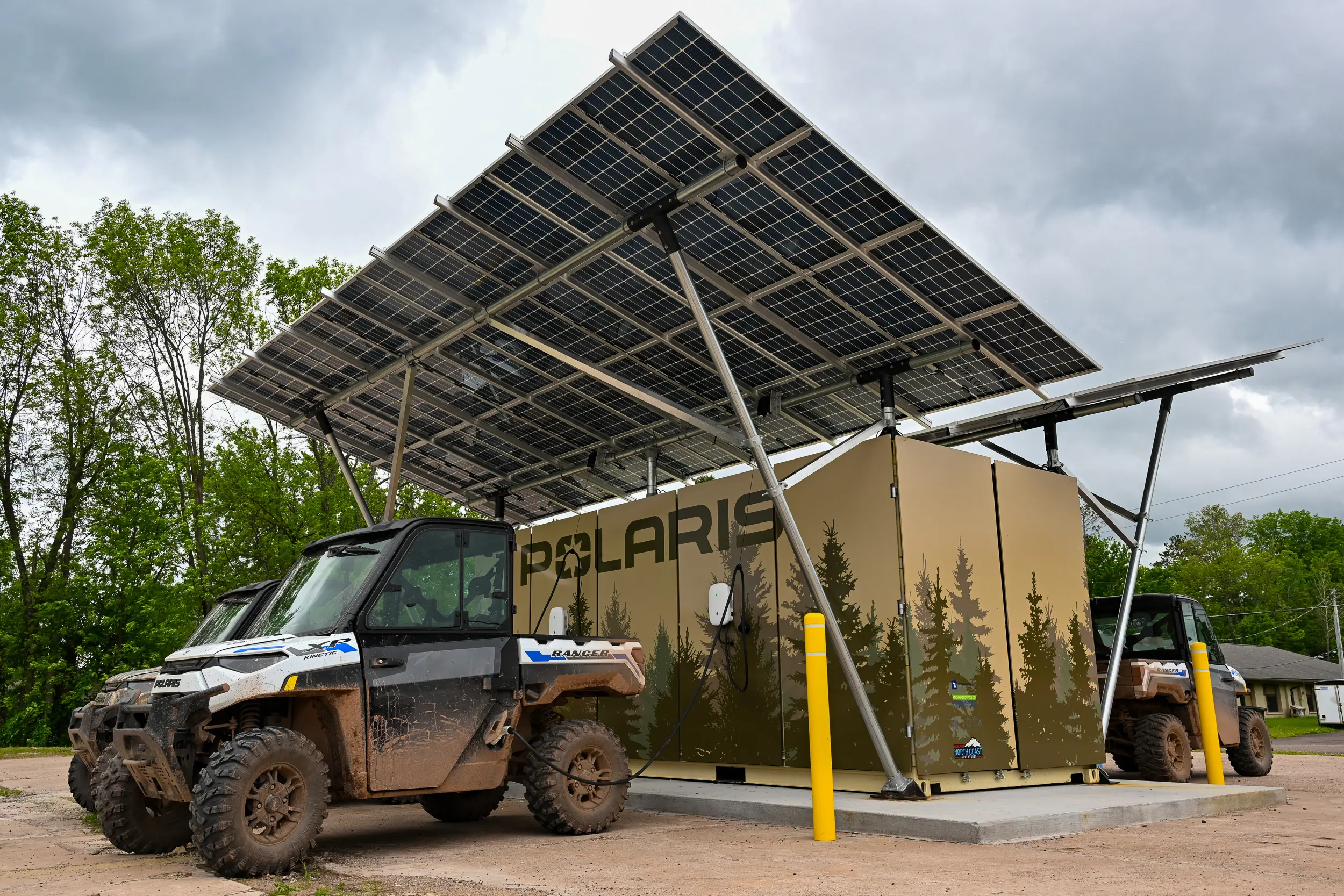
Solar Chargers: Your Trailside Power Plant
Gone are the days of your phone dying just as you reach the perfect photo op. Solar chargers have evolved from bulky, inefficient panels into sleek, high-output power sources that are a non-negotiable for the modern hiker.
How Modern Solar Panels Conquer the Shade
Early solar chargers needed direct, blazing sunlight to work. Today’s models use advanced photovoltaic cells and efficient circuitry that can harvest energy even under dappled forest light or on overcast days.
Key features to look for in a trail-ready solar charger:
- High Conversion Efficiency: Look for panels with 22-25% efficiency ratings. This means more power from the same surface area.
- Durability: Your charger should be waterproof, dustproof, and feature a rugged, scratch-resistant surface.
- Integrated Power Bank: The best models combine a solar panel with a built-in battery. It charges the battery by day, and you can charge your devices from the battery at any time—even at night.
- Multiple Ports & Smart Charging: USB-C Power Delivery (PD) ports are essential for fast-charging modern devices like phones and GPS hiking watches. Smart technology detects your device and delivers the optimal current.
- Multi-Band GNSS: This provides pinpoint location accuracy, even in deep gorges or dense tree cover where old GPS signals failed.
- Advanced Health Metrics: Monitor your blood oxygen saturation (SpO2) at altitude, track stress levels, and analyze your heart rate variability to gauge recovery.
- Pre-Loaded Topo Maps: Color maps right on your wrist make navigation intuitive and reduce constant phone checking.
- Satellite Communication & SOS: Some high-end models offer two-way messaging and emergency SOS functions via satellite networks, a true lifesaver in areas without cell service.
- The Long-Distance Endurance Hiker: Prioritize battery life measured in weeks, not days, and robust navigation features.
- The Peak Bagging Mountaineer: Look for barometric altimeters, storm alerts, and ClimbPro ascent planning features.
- The Casual Weekend Explorer: A watch with reliable GPS, good battery life, and health tracking will cover all the bases.
- Crowdsourced Real-Time Data: The app anonymously collects data from other hikers’ devices. This shows you current average hiking speeds, congestion points, and even where people have recently stopped for photos.
- Condition Forecasting: By analyzing weather data, historical trends, and recent user reports, AI can predict trail conditions. It might warn you that a certain creek crossing will likely be dangerously high after last night’s rain upstream.
- Personalized Routing: Tell the app you want a 10-mile loop with less than 1,500 feet of elevation gain and a water source at the midpoint. The AI will generate several options, ranked by how well they match your criteria and current conditions.
- Offline Intelligence: The best apps process this data and allow you to download not just the map, but the intelligent insights for offline use.
- Usage Tracking & Filter Life Alerts: A Bluetooth-connected filter syncs with an app on your phone to log how many liters have been purified. It gives you a precise, percentage-based countdown on your filter’s remaining life, so you never have to guess if it’s still effective.
- Maintenance Reminders: The app can notify you when it’s time for a backflush cleaning to restore flow rate, maximizing the lifespan of your filter cartridge.
- Community Data on Water Sources: Some ecosystems allow users to tag and report on water sources, noting flow rate, clarity, or potential contamination concerns, benefiting the entire hiking community.
- The Power Flow: Your solar charger keeps your GPS watch, phone (which runs your AI trail map app), and the smart water filter’s Bluetooth transmitter powered up.
- The Data Loop: Your GPS watch records your track and vital signs. You sync this data to your fitness app, contributing to your personal analytics and, anonymously, to broader trail condition data that feeds AI maps.
- The Safety Net: The watch provides navigation and SOS. The AI map warns of hazards. The smart filter ensures safe hydration. Each is a layer in a comprehensive safety system.
- Anchor Text: “best solar chargers for backpacking” → Link to product review/comparison page.
- Anchor Text: “how to read a topo map” → Link to a foundational skills article.
- Anchor Text: “essential backpacking checklist” → Link to a comprehensive packing guide.
- Link to authoritative studies on waterborne pathogens from the CDC.
- Link to NOAA’s weather resource page for understanding meteorological data.
- Link to a reputable site like REI’s expert advice section for general hiking principles.
- Suggested Social Post: “Is your hiking gear stuck in the past? Discover how solar chargers, AI maps, and smart filters are creating a safer, smarter adventure. #HikingTech #GearGuide #SmartHiking”
- Featured Image Alt Text: A collection of modern hiking gear including a solar charger, GPS watch, smartphone with trail map, and smart water filter laid out on a topographic map.
Pro-Tip: Use a carabiner to attach your unfolded solar panel to the outside of your backpack while you hike. It’s a simple way to generate power all day long without stopping.
A reliable solar charger is no longer a luxury; it’s the cornerstone that powers your entire ecosystem of smart hiking gear.
GPS Hiking Watches: The Command Center on Your Wrist
The humble wristwatch has become a mission control for adventurers. A modern GPS hiking watch does far more than tell time—it’s a navigator, a fitness coach, and a safety device all in one.
Beyond Basic Tracking: What a Smart Watch Really Does
While tracking distance and pace is standard, the latest watches offer features that feel like they’re from the future:
Choosing the Right Watch for Your Adventure
Your needs will dictate your choice:
Internal Link Suggestion: Considering a new watch? Read our detailed comparison of the top 5 GPS hiking watches for [Year] to find your perfect match.
AI Trail Maps: Navigation That Thinks Ahead
Paper maps are timeless, and digital PDFs are helpful, but AI trail maps represent a quantum leap. These are living, breathing maps that learn and adapt, offering a dynamic view of the trail you’re about to take.
How Artificial Intelligence Enhances the Trail
AI transforms static map data into an intelligent guide by aggregating and analyzing vast amounts of information:
Popular platforms like Fatmap and Gaia GPS are increasingly integrating these AI-driven features, moving us from simply seeing where the trail is to understanding what the trail will be like.
Smart Water Filters: Hydration with Peace of Mind
Water is life on the trail, and purification is critical. Smart water filters add a layer of data-driven confidence to this essential task, ensuring every sip is safe.
The “Smart” in Water Filtration
What makes a filter intelligent? It’s all about feedback and monitoring:
While the core technology—be it hollow fiber, electrostatic, or UV-C light—remains the critical purification element, the smart features remove uncertainty and promote better filter stewardship.
Building Your Integrated Tech System
The true magic happens when these devices work in harmony. Here’s how to create a seamless tech ecosystem for your hikes:
Remember: Technology is a tool, not a replacement for fundamental skills. Always carry a physical map and compass, know how to use them, and inform someone of your trip plan.
FAQ: Tech-Forward Hiking Gear
Q: Isn’t all this technology against the spirit of getting into nature?
A: It’s a personal choice. For many, tech removes distractions and anxieties (like getting lost or running out of water), allowing them to be more present and confident in the wilderness. It’s about enhancing the experience, not dominating it.
Q: How do I manage battery life on a multi-day trip?
A: This is where your solar charger is vital. Ration device use: put your phone in airplane mode and only turn on GPS periodically, use your watch’s battery-saver modes, and download maps for offline use to avoid constant data streaming.
Q: Are smart water filters worth the extra cost over traditional ones?
A: If you hike frequently or on long trips, the smart features provide excellent value by ensuring you never compromise on filter effectiveness and by helping you maintain the filter properly. For casual day hikers, a traditional filter may suffice.
Q: Do I need a subscription for AI trail map apps?
A: Most premium apps (like Gaia GPS, AllTrails Pro, or Fatmap) operate on a subscription model (annual or monthly). This fee supports the constant data aggregation, server costs, and development of those advanced AI and forecasting features. Free versions often have limited offline and analytical capabilities.
Conclusion: Embrace the Future of the Trail
The landscape of hiking is changing, powered by innovation that fits in your pocket or straps to your wrist. Solar chargers grant energy independence. GPS hiking watches offer unparalleled navigation and health insight. AI trail maps provide a dynamic, intelligent view of your route. Smart water filters deliver hydration with data-backed confidence.
Together, this tech-forward hiking gear creates a safer, more informed, and deeply enriching outdoor experience. It allows you to push your boundaries while managing risk, to explore further while staying connected to what matters. Start by integrating one piece at a time—perhaps a robust solar charger to keep everything running. Before long, you’ll wonder how you ever hiked without this intelligent assistance.
Ready to upgrade your adventure? Browse our curated selection of trusted, trail-tested tech gear and hit the path with confidence. The trail is calling—and now, it’s smarter than ever.
—
Internal Link Suggestions for Publication:
External Link Suggestions (Open in New Window):
Social Sharing Optimization:
Schema Markup Recommendation: Implement HowTo schema for the “Building Your Integrated Tech System” section and FAQPage schema for the question-and-answer segment to enhance search visibility and eligibility for rich results.